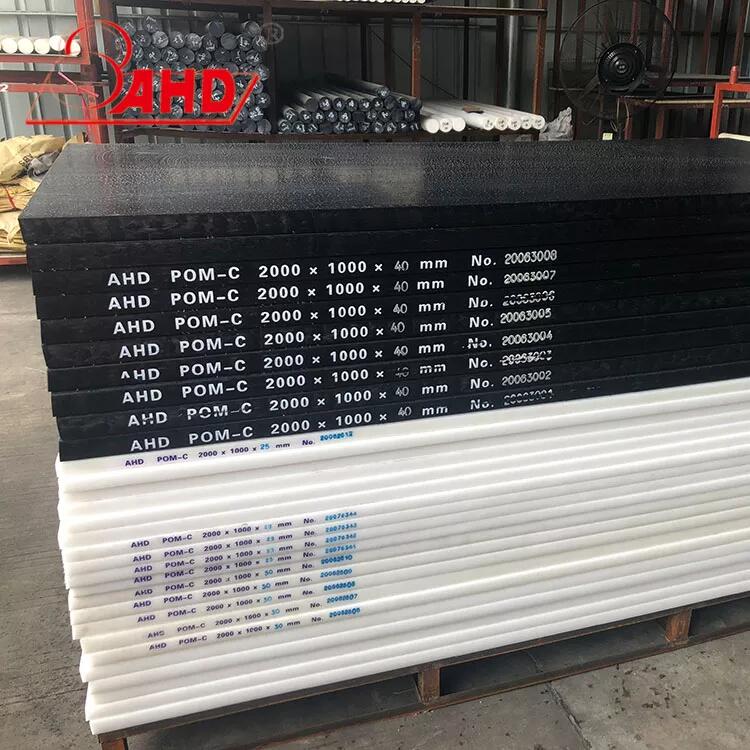
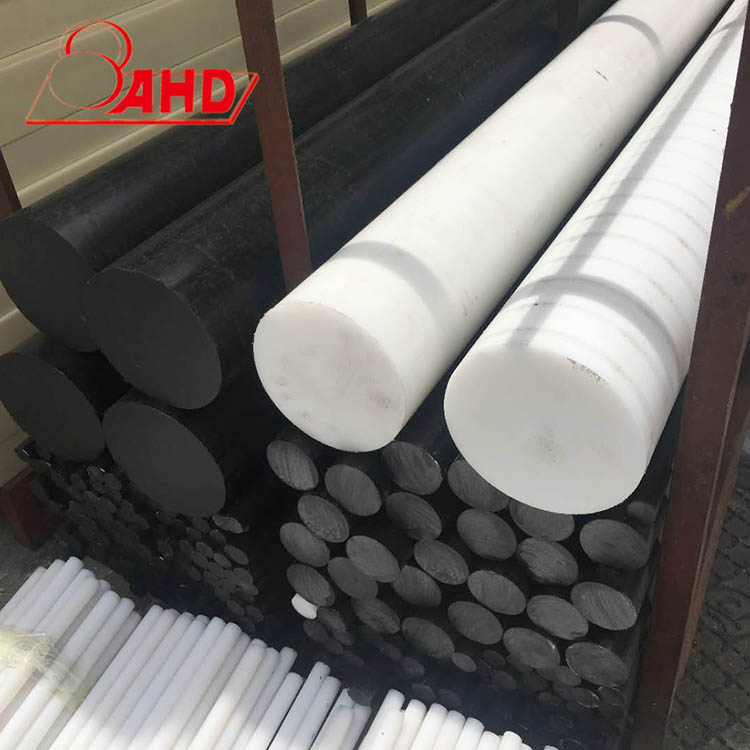
In the relentless pursuit of advanced manufacturing excellence, materials innovation stands as the cornerstone of industrial evolution. Today, Polyoxymethylene (POM) Rod and POM Sheet—engineered with "steel-like" mechanical properties—are redefining precision across sectors such as automotive, electronics, and medical devices. This article dissects their technical superiority, processing advancements, and industry-specific applications, revealing why POM is emerging as the material of choice for high-stakes engineering challenges.
Technical Mastery: Engineering a New Benchmark
POM’s molecular structure—a highly crystalline, linear polymer free of side chains—grants it metal-grade performance while retaining plastic processability.
Mechanical Resilience: With a tensile strength of 70 MPa and Rockwell hardness (M scale) up to 94, POM outperforms metals in creep resistance and fatigue endurance. Its rigidity remains stable from -40°C to 104°C, making it ideal for dynamic load-bearing applications.
Self-Lubricating Wear Resistance: By integrating PTFE fibers or graphite, friction coefficients drop to 0.15–0.2, reducing wear by 30%. Test data shows a POM-H+PTFE composite rod enduring 5,000 hours of continuous operation in bearing tests with <5% friction coefficient degradation.
Chemical Fortitude: POM resists fuels, lubricants, and mild acids/bases but requires caution in strong oxidizing environments. An automotive supplier replaced metal fuel pump housings with copolymer POM Sheet, achieving 1,000-hour fuel immersion resistance while cutting weight by 40%.
Electrical Insulation: With a dielectric constant and loss factor stable across frequencies and arc resistance of 175 V/μm, POM excels in high-precision connectors and switches.
Process Innovation: Tailoring Solutions for Critical Needs
POM Rod and Sheet are engineered in standardized and custom grades to meet diverse demands:
Standard Grade: General-purpose POM 100P (Rockwell 94, tensile strength 69 MPa at 23°C) suits gears and bearings.
Reinforced Grade: Glass-fiber-filled POM boosts flexural strength to 180 MPa and HDT to 150°C, enabling EV motor brackets.
High-Lubricity Grade: POM-H+PTFE reduces friction to 0.12, ideal for microscope stage guides.
UV-Resistant Grade: Outdoor POM Sheet with UV stabilizers doubles aging resistance for landscaping machinery gearboxes.
Precision processing demands strict temperature control (190–210°C). A leading molder achieved ±0.05mm tolerance and 98% yield using closed-loop temperature systems.
Industry Dominance: From Automotive to Medical Breakthroughs
Automotive: A German OEM reduced window regulator slider weight by 60% and noise by 15 dB using POM Rod. POM Sheet seatbelt buckles passed 100,000-cycle fatigue tests with 80 J/m² impact strength.
Electronics: POM’s dielectric stability and dimensional control benefit 5G base station filters and high-speed connectors. A POM coil bobbin maintained <0.5% dielectric loss fluctuation from -40°C to 125°C.
Medical: FDA-compliant POM Sheet enables artificial joint friction surfaces with <0.1 mm³/million-cycle wear. Endoscope control rods crafted from POM Rod achieved 100,000+ flex fatigue cycles.
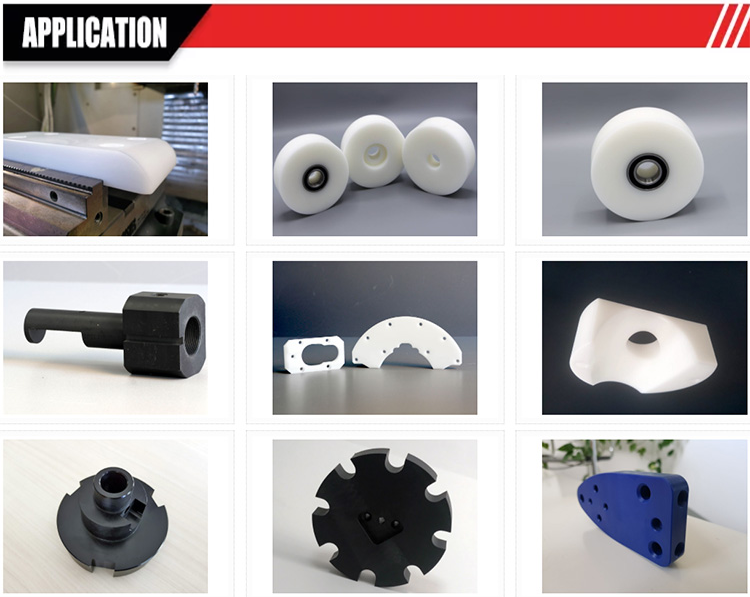
Industrial Machinery: In CNC machines, POM guide rails and slides deliver 0.01mm positioning accuracy and triple the lifespan of nylon counterparts.
Future Trajectory: Sustainability Meets Intelligence
As industries embrace decarbonization, biodegradable POM variants are emerging. One firm reduced degradation time to 3 years while retaining 90% mechanical properties via nanocomposite technology. Meanwhile, smart POM Rods with embedded stress sensors are in trials, offering real-time fatigue monitoring for Industry 4.0 applications.
From metal replacement to setting new material standards, POM Rod and Sheet are reshaping engineering possibilities with their blend of rigidity and adaptability. As material science converges with manufacturing innovation, this "steel-like" polymer is poised to unlock unprecedented performance across high-end sectors.